disco / pop
The term “disco” is a shorthand for the word discothèque, a French word for “library of phonograph records”.
The first disco hits influenced by soul and funk music date back to 1973-1974: “You’re The First, The Last, My Everything” (Barry White), “Rock Your Baby” (George McCrae), and “Never Can Say Goodbye” (Gloria Gaynor).
The basic tempo of disco is around 120 beats per minute, with alternating bass drum and snare drum beats, and cymbals filling in the gaps between beats.
On April 6, 1974, the song “Waterloo” enabled the group ABBA to stand out and win the title at the Eurovision Song Contest.
“Dancing Queen” (1976, Abba) summed up the essence of the genre : an invitation to move on the dance floor.
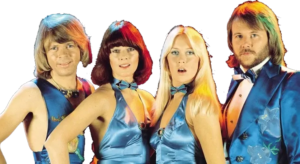
AᗺBA
Agnetha Fältskog, Benny Andersson,
Björn Ulvaeus Anni-Frid Lyngstad
1974
1975 – 1976
« Supernature » is Cerrone‘s third album, released in September 1977, followed by « Give Me Love » in 1978.
1977
1978
The year 1979 was very rich in musical productions of all genres: pop-rock, hard rock with the release of Led Zeppelin’s album “In Through the Out Door” post-punk, and disco.
Among all these genres: you had to choose your camp !
In the United Kingdom, Abba compilation vinyl records were used as “frisbees” by detractors of the genre, as was the case in the United States with the “Disco Destruction Night” on July 12, 1979, after the Detroit Tiger vs Chicago White Sox game, where a crate filled with disco records was destroyed with explosives in the middle of the Comiskey Park baseball stadium.
This scene, known as “post-disco”, catering to the New York metropolitan area, was initially led by urban contemporary musical artists in response to the perceived over-commercialization and artistic downfall of disco culture.
A pioneer of the New York punk scene in the 1970s, the new wave band: Blondie is known for its electric mix of musical styles incorporating elements of disco: “Atomic, Call Me, Rush Rush”, pop, reggae “Island Of Lost Souls”, and punk.

1979
1980
1983
1984 – 1990
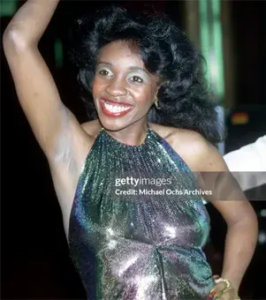
De gauche à droite : Amii Stewart, Donna Summer, Anita Ward. © Michael Ochs, Getty Images